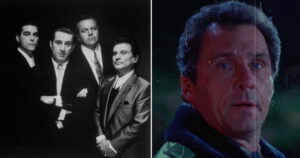
Beau Starr, a veteran character actor whose steady screen presence earned him memorable roles in two of cinema’s most recognizable films—Goodfellas and the Halloween franchise—has passed away at the age of 81. According to family confirmation, Starr died peacefully of natural causes on April 24, 2026, at his home in Vancouver, Canada. The announcement was shared by his younger brother, fellow actor Mike Starr, who expressed both grief and pride in Beau’s long and varied life. Though not always a headline name, Beau Starr’s career represented something rare in Hollywood: longevity built on reliability, authenticity, and an ability to elevate every scene he entered, whether in a blockbuster film, a television guest role, or a small supporting part that still left a lasting impression on audiences. His passing marks the end of a quietly influential career that stretched across decades of evolving entertainment history, from the gritty realism of 1990s crime cinema to the enduring mythology of horror film franchises that continue to define popular culture.
Born on September 1, 1944, in Queens, New York, Beau Starr’s early life was not initially centered around acting. Like many young men of his generation, he first found himself drawn into the world of athletics rather than performance. Before stepping in front of a camera, Starr pursued a career in American football, demonstrating both discipline and physical determination that would later serve him well in his acting roles. He played in the Canadian Football League, suiting up for teams such as the Hamilton Tiger-Cats and the Montreal Alouettes. In addition, he spent time on the taxi squad of the New York Jets, gaining experience within the highly competitive environment of professional football in the United States. Though he never became a household name in sports, his athletic background shaped his work ethic and provided him with a foundation of resilience that would become essential during his later transition into acting. Those who knew him during this period often described him as focused, grounded, and quietly ambitious, someone who understood teamwork and discipline long before he ever set foot on a film set.
It was not until his mid-30s that Beau Starr made a dramatic career shift into acting, a move that would redefine his professional identity. Unlike many actors who begin training in their youth, Starr entered the entertainment industry later in life, bringing with him a sense of realism and lived experience that would become one of his defining strengths. His earliest on-screen appearance came in 1980 in a Canadian sketch comedy program, marking the beginning of what would become a steady stream of television and film roles. From the outset, Starr was not cast as a leading man, but rather as a dependable character actor—someone who could be trusted to deliver authenticity in supporting roles that required presence, authority, or emotional grounding. Over time, he built a reputation for being reliable on set, professional in demeanor, and capable of slipping into a wide range of roles without overshadowing the main cast. In an industry often focused on fame and visibility, Starr carved out a different kind of success: one rooted in consistency, respect, and craftsmanship rather than celebrity.
His breakthrough in mainstream cinema came with his role in the 1990 crime epic Goodfellas, directed by Martin Scorsese. In the film, Starr portrayed the father of Henry Hill, the main character played by Ray Liotta. Though his screen time was limited compared to the film’s central figures, his performance contributed to the layered depiction of family dynamics within the world of organized crime. Goodfellas itself has since become one of the most acclaimed films in modern cinema, praised for its realism, pacing, and unforgettable performances from actors such as Robert De Niro, Joe Pesci, and Liotta. Within this ensemble of powerhouse talent, Beau Starr’s role stood as a grounding presence, helping to illustrate the domestic and generational dimensions of Henry Hill’s life. For many viewers, his portrayal added emotional texture to the story, reminding audiences that behind every criminal narrative lies a complex network of family relationships, expectations, and consequences. His involvement in such a landmark film ensured his place, however modest, within the legacy of American cinematic history.
Following his appearance in Goodfellas, Starr continued to build a strong presence in the horror genre, most notably through his involvement in the Halloween franchise. He appeared as Sheriff Ben Meeker in Halloween 4: The Return of Michael Myers and reprised the role in Halloween 5: The Revenge of Michael Myers. These films, released in the late 1980s, contributed significantly to the ongoing mythology of Michael Myers, one of horror’s most enduring antagonists. Starr’s portrayal of Sheriff Meeker brought a sense of authority and urgency to the small-town setting, grounding the supernatural terror in a believable human response. As a law enforcement figure, his character represented the struggle of ordinary individuals attempting to confront an unstoppable force of violence. Within the horror community, his performances are still remembered as part of the franchise’s transitional era, bridging the early foundational films with later reinterpretations and sequels. While horror franchises often evolve rapidly, Starr’s contributions helped maintain continuity and emotional seriousness in a series that has spanned decades and multiple creative reinventions.
Beyond film, Beau Starr also maintained a steady presence on television throughout the 1980s and 1990s, appearing in a wide range of popular series that defined the era. His credits include guest roles in shows such as Knight Rider, The A-Team, MacGyver, and Moonlighting, all of which were staples of network television during their peak popularity. These appearances showcased his adaptability, as he moved seamlessly between action, drama, and procedural storytelling formats. Television at the time relied heavily on strong supporting actors who could deliver compelling performances within limited screen time, and Starr excelled in this environment. His ability to portray authority figures, working professionals, and grounded everyday characters made him a frequent and dependable choice for casting directors. His final credited screen appearance came in 2013 on the television series Psych, marking the quiet conclusion of a career that had spanned more than three decades in the entertainment industry. Even after stepping away from acting, his body of work continued to circulate through reruns, streaming platforms, and film retrospectives, ensuring that new audiences would continue to discover his performances long after his retirement.
In the wake of his passing, tributes have begun to emerge from colleagues, fans, and those who worked alongside him throughout his career. Actor Christopher Serrone, who appeared with Starr in Goodfellas, remembered him as a “great guy” who lived a “rich and meaningful life” as both a family man and a professional artist. His brother Mike Starr, also an actor, confirmed the news of his passing and emphasized the peaceful nature of his final moments. These reflections paint a picture of a man who may not have sought fame but instead focused on living a balanced and fulfilling life. Beau Starr’s legacy is not defined solely by leading roles or headline recognition, but by the consistency of his craft and the respect he earned from those within the industry. He represents a generation of actors whose work formed the backbone of film and television storytelling—performers whose names may not always dominate marquee billing, but whose contributions are essential to the emotional and narrative depth of the stories they helped bring to life. His passing leaves behind not only a filmography of memorable roles but also a quiet example of dedication, professionalism, and artistic integrity that will continue to resonate with those who appreciate the craft of acting in its most grounded form.