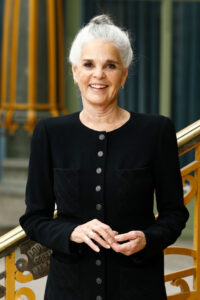
The story of Ali MacGraw is one that feels almost cinematic in itself—an arc defined by sudden fame, deeply personal choices, emotional highs and lows, and ultimately, a quiet reinvention far removed from Hollywood’s spotlight. Born Elizabeth Alice MacGraw in 1939 in Pound Ridge, New York, her early life was far from glamorous. She grew up in a household shaped by creativity but also instability. Both her parents were artists, yet financial struggles were constant, and the emotional environment at home could be difficult. Her father, marked by a painful childhood of his own, carried unresolved anger that sometimes surfaced in troubling ways, leaving lasting impressions on the family. Privacy was scarce, comfort even more so. Despite this, MacGraw developed a strong inner resilience early on, paired with a desire to pursue something creative—something that would eventually guide her path forward. Education became her first stepping stone, earning her a scholarship and later attending Wellesley College, a place that helped shape her independence and sense of direction before she stepped into the unpredictable world of fashion and film.
Her entry into New York’s fashion scene began humbly, working behind the scenes at Harper’s Bazaar under demanding conditions that tested her discipline and work ethic. What started as an assistant role quickly evolved when her striking presence caught the attention of photographers, leading her into styling and eventually modeling. It wasn’t long before she transitioned from being behind the camera to standing in front of it, appearing in magazines and commercials that introduced her to a wider audience. That visibility opened the door to acting—a leap that would change her life almost overnight. Her early film work included a role in Goodbye, Columbus, which earned her recognition and a Golden Globe for Most Promising Newcomer. But it was her role as Jenny in Love Story that catapulted her into global stardom. The film became a cultural phenomenon, resonating deeply with audiences and turning MacGraw into one of the most recognizable faces of the early 1970s. Her performance earned her an Academy Award nomination and another Golden Globe, solidifying her place in Hollywood’s elite almost instantly.
At the height of her fame, MacGraw’s personal life began to intertwine with her professional success in ways that would ultimately alter both. Her relationship with film producer Robert Evans seemed like a natural extension of her rising career. The two married and welcomed a son, Josh Evans, building what appeared to be a stable life amid Hollywood’s chaos. But everything shifted when she met Steve McQueen during the filming of The Getaway. Their connection was immediate and intense, drawing MacGraw into a relationship that would become one of the most defining—and challenging—chapters of her life. She left Evans and stepped into a new life with McQueen, a decision driven by passion but complicated by reality. While McQueen was admired for his charisma and individuality, their relationship revealed a different side—one marked by control, insecurity, and expectations that increasingly limited MacGraw’s independence. He discouraged her from working, preferring that she remain at home, and imposed conditions that gradually distanced her from the career she had worked so hard to build.
Choosing to prioritize the relationship meant stepping away from Hollywood at a time when her career was still thriving. For a while, she embraced that decision, focusing on family life. But over time, the cost of that sacrifice became more apparent. The dynamic between them grew strained, with jealousy and control creating an environment that was difficult to sustain. McQueen’s expectations extended beyond her career, influencing her daily life and personal freedom. Eventually, the relationship reached a breaking point, and the two divorced in 1978. By then, MacGraw’s absence from the industry had already impacted her momentum as an actress. Attempts to return to film were met with limited success, and the changing landscape of Hollywood—particularly for women over 40—made it even more challenging. Films like Players and Just Tell Me What You Want failed to revive her earlier success, leaving her at a crossroads both professionally and personally.
The years that followed were among the most difficult in her life. Struggling with feelings of loss, identity, and direction, MacGraw turned to alcohol as a way to cope, a decision that only deepened her challenges. She later spoke openly about how her judgment suffered during that period, acknowledging the mistakes she made and the toll it took on her relationships, particularly with her son. In 1986, recognizing the need for change, she made the decision to enter the Betty Ford Center, where she began the process of rebuilding her life. That step marked a turning point—not an instant transformation, but the beginning of a more grounded, intentional way of living. Around the same time, she faced another setback when her home was destroyed in a wildfire, prompting her to leave Los Angeles and seek a quieter, more meaningful environment. She eventually settled in Tesuque, New Mexico, a small community where life moved at a different pace and where she could focus on personal growth rather than public perception.
In the decades since stepping away from the spotlight, MacGraw has built a life centered on balance, creativity, and purpose. While she never fully abandoned acting—appearing occasionally in projects like The Winds of War and later returning to the stage—her priorities shifted toward things that brought her genuine fulfillment. She became involved in community work, supported causes she believed in, and explored new creative outlets, including yoga and design. Her relationship with her son remained a central part of her life, and she has often spoken with pride about his accomplishments and character. Looking back, her journey reflects something deeper than the typical rise-and-fall narrative often associated with Hollywood. It’s a story about choices—some driven by love, others by necessity—and the long process of understanding their consequences. In stepping away from fame, she didn’t disappear; she redefined what mattered. And in doing so, Ali MacGraw found something that eludes many who achieve early success: a sense of peace that isn’t dependent on the spotlight, but on the life built beyond it.