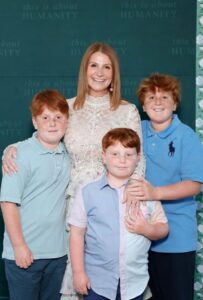
Henry Winkler may always be remembered by many as the effortlessly cool and charismatic Fonzie from Happy Days, but behind that iconic role is a man whose greatest pride today isn’t fame—it’s family. At 80 years old, Winkler has stepped into a phase of life that feels quieter on the surface but is deeply rich in meaning. His days are no longer defined by scripts, sets, or red carpets, but by laughter echoing through his home, small footsteps running down hallways, and the joyful chaos that comes with being a grandfather to seven lively grandchildren. In this role, affectionately known as “Papa,” he has found something that many people spend a lifetime searching for: a sense of purpose rooted not in achievement, but in connection.
Winkler’s journey to this stage of life didn’t happen overnight. Alongside his wife, Stacey Weitzman, whom he married in 1978, he built a strong and enduring family foundation. Together, they raised their children—Max, Zoe, and Stacey’s son Jed from a previous marriage—creating a household that emphasized support, resilience, and togetherness. Over time, that family expanded, evolving into a new generation that now includes seven grandchildren: India, Ace, Lulu, Jules, Gus, Francis Joan, and the newest addition born in 2024. Each child brings their own personality, energy, and perspective into the family dynamic, turning every gathering into a vibrant mix of voices, laughter, and stories waiting to unfold. For Winkler, this isn’t just a continuation of family—it’s an entirely new experience, one that he approaches with both wisdom and curiosity.
Despite decades of parenting experience, Winkler has openly shared that being a grandparent feels completely different. While the emotional bond remains just as powerful, the role itself carries a lighter, more observational quality. There is less pressure to shape every outcome and more freedom to simply be present. He has described this stage as one filled with discovery, where he gets to learn who each grandchild is without the same weight of responsibility that comes with raising children. That doesn’t mean he takes the role lightly—quite the opposite. It means he has the space to engage more intentionally, to notice the small details, and to respond to each child as an individual. He understands that what works for one may not work for another, and that flexibility is part of what makes the experience so meaningful.
At the heart of Winkler’s approach to grandparenting is a balance that many strive for but few truly achieve. He is warm, playful, and deeply affectionate, but he also believes in structure. His home isn’t without rules—it simply operates on a set of expectations that are clear, consistent, and rooted in respect rather than control. One of the most important rules revolves around awareness of others. When the youngest granddaughter is asleep, the house shifts into a quieter mode. There is no yelling, no fighting, and perhaps most notably, the older children are expected to take responsibility for maintaining that environment—not just for themselves, but for their friends as well. It’s a subtle but powerful lesson: respect isn’t just about following instructions, it’s about understanding how your actions affect the people around you.
Another rule in Winkler’s home is deceptively simple: everyone clears their own dish. Regardless of age, from the youngest child to the teenagers, this expectation remains the same. On the surface, it may seem like a small habit, but its impact runs deeper. It teaches accountability, reinforces the idea that everyone contributes to the household, and gently instills a sense of independence. These are not grand, complicated rules designed to control behavior—they are everyday practices that build character over time. Winkler doesn’t rely on strict discipline or rigid systems. Instead, he focuses on consistency and example, creating an environment where respect and responsibility feel natural rather than forced.
What makes these rules especially effective is the atmosphere in which they exist. Winkler’s home is not defined by restriction—it is defined by warmth. The rules don’t overshadow the joy; they support it. Laughter remains a constant presence, and the relationships he builds with his grandchildren are filled with genuine affection. One of the most charming examples of this connection is his willingness to engage with them on their terms. In an age where generational gaps can feel wider than ever, Winkler bridges that distance with openness and humor. He has even joined his grandchildren in creating TikTok videos, something he admits he would never have done on his own. It was his granddaughter India who encouraged him, telling him, “Papa, you have to make a TikTok,” and instead of resisting, he embraced the moment.
These playful interactions are more than just fun—they are a reflection of mutual respect. Winkler doesn’t position himself as someone who simply sets rules from above; he participates, listens, and adapts. By stepping into his grandchildren’s world, he shows them that their interests matter, that their voices are heard, and that connection is a two-way street. This balance between guidance and openness is what allows his relationships with them to flourish. They don’t just see him as an authority figure—they see him as someone who understands them, someone who is willing to meet them where they are while still providing structure and support.
Family, for Winkler, extends beyond everyday moments into shared experiences that create lasting memories. One such moment occurred recently at the Los Angeles premiere of his film Normal. Two of his grandsons accompanied him to the event, marking their first time on a red carpet. For many, this might seem like a glamorous outing, but for Winkler, it was something much more personal. When asked why the boys were there, his answer was simple and telling: they were there to support their grandfather. That sense of mutual support speaks volumes about the environment he has cultivated. It’s not just about him showing up for them—it’s about them wanting to show up for him as well.
Of course, not every grandchild could attend the event. Some stayed home due to school responsibilities, a reminder that even within a family connected to the entertainment world, everyday priorities still matter. Winkler has always emphasized the importance of balance, ensuring that his grandchildren grow up with a sense of normalcy alongside their unique experiences. Whether they are attending a premiere or staying home to finish homework, each moment is treated with equal value. This grounded perspective helps create stability, allowing the children to grow with a clear understanding of both privilege and responsibility.
What stands out most about Winkler’s approach is its simplicity. In a world where parenting and grandparenting advice can often feel overwhelming, filled with conflicting theories and expectations, his philosophy cuts through the noise. He doesn’t rely on complex systems or strict ideologies. Instead, he focuses on a few core principles: respect for others, personal responsibility, and the importance of connection. These values are not enforced through fear or pressure, but through consistency and example. They are lived, not just taught, creating an environment where children naturally absorb them over time.
There is also an underlying humility in the way Winkler approaches his role. Despite his fame and accomplishments, he does not position himself as someone who has all the answers. He remains open to learning, adapting to each grandchild’s unique personality and needs. This willingness to evolve is what keeps his relationships strong. It allows him to stay connected, not just as a figure of authority, but as someone who is genuinely engaged in their lives. He listens, observes, and responds, creating a dynamic that feels both supportive and authentic.
In many ways, Winkler’s story is a reminder that family life doesn’t need to be complicated to be meaningful. The most important lessons are often found in the simplest moments: clearing a plate after dinner, lowering your voice when someone is resting, sharing a laugh over a silly video. These small actions, repeated over time, build something much larger—a sense of belonging, a foundation of respect, and a network of relationships that can withstand the challenges of life. They create a home that feels safe, welcoming, and alive with connection.
As he continues to embrace his role as “Papa,” Winkler demonstrates that the later stages of life can be just as fulfilling, if not more so, than the earlier ones. His legacy is no longer defined solely by the characters he has played or the accolades he has received, but by the relationships he nurtures and the values he passes down. Through his grandchildren, those values will continue to ripple outward, shaping future generations in ways that extend far beyond his immediate family.
Ultimately, what makes Winkler’s approach so compelling is not just the rules themselves, but the intention behind them. They are not about control or perfection—they are about care. They reflect a desire to create an environment where everyone feels seen, respected, and valued. In that sense, his home becomes more than just a place—it becomes a reflection of what family can be at its best: supportive, joyful, and grounded in the kind of love that grows stronger with each passing year.