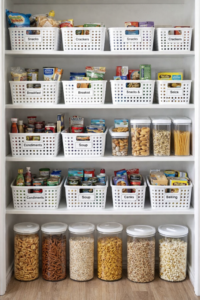
Transforming a cluttered pantry into an organized, functional, and visually pleasing space often feels like one of those projects people postpone indefinitely. Pantries tend to become catch-all zones where mismatched packages, half-used bags, and forgotten cans slowly accumulate until opening the door feels overwhelming. Many people assume that achieving a beautifully organized pantry requires expensive custom shelving, high-end containers, or professional organizers. In reality, a thoughtfully designed pantry can be created on a very modest budget using simple tools, affordable dollar store bins, and a clear organizational plan.
An organized pantry does far more than look nice. It saves time during meal preparation, reduces grocery overspending, minimizes food waste, and lowers everyday stress. When you can see exactly what you have and where it belongs, cooking becomes smoother, shopping becomes smarter, and your kitchen feels more supportive instead of chaotic. With intentional choices and a little creativity, even the smallest pantry can be transformed into a space that works hard for your daily life.
This guide walks through the entire process in detail—from mindset and planning to shopping, categorizing, styling, and maintaining your pantry—so that the results last well beyond the initial makeover. Whether you live alone, manage a busy family household, or simply want to bring order to an unruly space, this budget-friendly DIY approach can be adapted to fit your needs.
### Why Pantry Organization Matters More Than You Think
The pantry is one of the most frequently used storage spaces in the home, yet it is often the least organized. Over time, items get shoved to the back, duplicates get purchased unnecessarily, and expiration dates quietly pass unnoticed. This disorganization leads to wasted money, wasted food, and unnecessary frustration.
A well-organized pantry creates clarity. It allows you to take inventory at a glance, plan meals more efficiently, and maintain consistency in your kitchen habits. When each category has a designated space, the mental load of decision-making decreases. Instead of searching, guessing, or rearranging items every time you cook, you simply reach for what you need.
From an emotional perspective, organized spaces promote a sense of calm and control. Kitchens are often the heart of the home, and when that heart feels chaotic, it can subtly affect daily mood and energy. Creating order in the pantry is a small change that produces a surprisingly powerful ripple effect throughout everyday life.
### Why Dollar Store Bins Are a Smart Choice
Dollar stores offer a wide range of storage solutions that are often overlooked or underestimated. These bins are inexpensive, lightweight, and versatile, making them ideal for pantry organization. While they may not carry the prestige of high-end containers, they can be just as functional—and sometimes even more adaptable—when used thoughtfully.
The key advantage of dollar store bins is accessibility. You can purchase multiple bins for the cost of one premium container, allowing you to create a consistent system throughout your pantry without worrying about budget constraints. This consistency is what gives pantries that “professionally organized” look.
Dollar store bins come in a variety of shapes, sizes, colors, and materials, including plastic, wire, woven-look designs, and clear acrylic-style containers. This variety allows you to mix and match based on function rather than forcing your pantry to conform to a single expensive aesthetic.
### Step One: Resetting the Space Completely
Before purchasing a single bin, the first and most important step is to completely empty your pantry. This may feel daunting, but it is essential for success. Removing everything allows you to see the space clearly, identify problem areas, and assess what you actually own.
As you remove items, sort them into broad categories such as snacks, canned goods, grains, baking supplies, breakfast items, condiments, and miscellaneous. At the same time, check expiration dates and discard anything expired, stale, or no longer used. This step alone often reduces pantry contents by more than expected.
Cleaning the shelves is equally important. Wipe down surfaces, vacuum crumbs, and consider adding shelf liners or contact paper. This creates a clean foundation and makes maintenance easier going forward.
### Step Two: Measuring and Planning Before Shopping
One of the most common mistakes in DIY organization projects is buying containers before understanding the space. Dollar store bins may be affordable, but purchasing the wrong size or shape leads to wasted money and frustration.
Measure the width, depth, and height of each pantry shelf. Note any obstructions such as shelf supports or door hinges. Think about how items are currently accessed and which shelves are easiest to reach. Frequently used items should live at eye level, while heavier or less-used items can go on lower or higher shelves.
Sketching a simple layout—either on paper or mentally—can help guide your shopping decisions. Knowing roughly how many bins you need and what sizes will work prevents impulse purchases that don’t serve your system.
### Step Three: Choosing the Right Dollar Store Bins
When selecting bins, function should always come before aesthetics. However, when done well, the two can work together beautifully.
Neutral colors such as white, beige, gray, or clear create a clean and timeless look. These colors also make it easier to mix bin styles without visual clutter. Clear bins are particularly helpful for items you want to monitor closely, such as snacks or baking supplies, because you can see contents instantly.
Bins with handles are ideal for shelves that are deep or high, allowing you to pull categories forward easily. Wire bins work well for produce or items that benefit from airflow. Solid bins are better for small packages that might tip over or get lost.
Mixing textures—smooth plastic, woven-look bins, or metal accents—adds visual interest while still maintaining cohesion. The goal is balance, not uniformity for its own sake.
### Step Four: Categorizing with Intention
Once you have your bins, return to your sorted pantry items and refine categories. The more specific the categories, the easier the system will be to maintain. For example, instead of one large “snacks” category, consider separating chips, granola bars, sweet snacks, and savory snacks.
Assign one category per bin whenever possible. This prevents overstuffing and makes it clear when something needs restocking. It also reduces the temptation to toss unrelated items into random spaces.
Labeling is crucial. Labels remove guesswork and help everyone in the household follow the system. You can use chalkboard labels, adhesive labels, handwritten tags, or a label maker. The style doesn’t matter as much as clarity and consistency.
### Step Five: Arranging the Pantry for Daily Use
Placement matters just as much as categorization. Arrange bins on shelves based on frequency of use and weight. Items used daily should be easily accessible without bending or stretching. Heavier items belong on lower shelves for safety.
Grouping bins by function creates a natural flow. For example, placing breakfast items together or baking supplies near each other makes meal prep more intuitive. Keep overflow items in designated bins so they don’t disrupt primary categories.
Don’t forget vertical space. Stacking bins, using shelf risers, or placing narrow bins side by side can maximize storage without overcrowding.
### Step Six: Customizing for Your Household
Every household has unique needs, and your pantry should reflect that. Families with children may benefit from lower snack bins that kids can access independently. Color-coded bins can help younger family members identify categories easily.
For those who prefer a rustic or farmhouse style, wooden crates or faux-wood bins can replace plastic options. If space is limited, over-the-door organizers or hooks can hold small items like spice packets or measuring tools.
Personalizing the pantry makes it more likely that the system will be respected and maintained. When a space feels tailored to your habits, it becomes easier to keep organized.
### Maintaining the System Over Time
The true test of any organization system is whether it lasts. Maintenance doesn’t require perfection—just consistency. A quick weekly check-in to return items to their bins and wipe shelves can prevent clutter from rebuilding.
Periodically reassess categories. As habits change, your pantry should evolve with you. Adjust bin sizes, labels, or placement as needed to keep the system working smoothly.
An organized pantry is not about rigid rules. It’s about creating a supportive environment that reduces stress and saves time.
### The Bigger Impact of an Organized Pantry
Beyond convenience, an organized pantry encourages mindful consumption. Seeing what you already have reduces impulse buying and supports more intentional grocery planning. This leads to less waste, more balanced meals, and financial savings over time.
There is also a quiet sense of satisfaction that comes from opening a pantry that feels calm, functional, and cared for. It sets a positive tone for the entire kitchen and, by extension, daily life.
With a modest budget, dollar store bins, and a thoughtful approach, pantry organization becomes accessible rather than intimidating. The result isn’t just a prettier space—it’s a kitchen that works with you, not against you.
Sometimes the most meaningful transformations don’t require luxury or excess. They require intention, creativity, and the willingness to begin.