With numerous articles about optical illusions with images that trick the mind orbiting social media, you’ve probably wondered how they work.
One of these images is the one shown in this article and apparently only 1% of the people can solve it. The photograph is supposed to have an animal (panda) that a very low percent of people can see.
This is called the McCollough effect which is a trick on the mind. After staring at a colored grating for several minutes, your brain will start to see a pink tinge or other colors when viewing the black and white stripes.
Tilting your head 90 degrees can either improve or reduce the effect. Rotating the induction images can reverse the effect. Additionally, the more you look at the induction images, the longer the effect will be.
This visual illusion is called an afterimage since you’re removing the stimulus but the sight persists. Scientists claim that it results from a continued activation of our visual system.
Strong colors make a bigger impression on the visual system. They trick it into believing that you’re still seeing the colors when they’re not there.
The same thing happens when a flash from the camera stays in the vision even after closing the eyes. The Journal of Experimental Psychology claimed that the effect can last for more than three months if a person looks at the colorful gratings for a long period. The person that discovered this effect was the US psychologist Celeste McCollough Howard by which the effect was named by. He called the effect ‘contingent aftereffect’ which is an illusion affecting the brain for an extended period.
You can test it yourself with the images below (the test is not harmful; it will affect your vision only for a while).
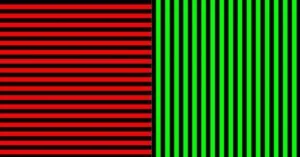
Scientists want to find out how this effect occurs with some speculating that it’s linked with the neurons of the visual cortex. Other experts claim that the brain is color-correcting the world and is stuck. Another group claims that it’s like a withdrawal symptom or absence of color.
An experiment was conducted on a person that suffered significant brain damage. This 1995 research claimed that the effect worked using the red-and-green gratings and the black-and-white gratings, leading researchers to think that the effect occurs within the visual cortex. Julien Ciroux agrees with this research.
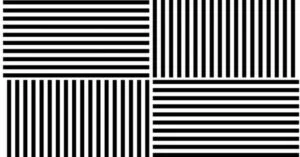
The two induction images can stimulate the effect by staring at the center for a few minutes and alternating. After, looking at this image will allow you to see red, green, or pinkish parts.
Researchers proved that the red and green stripes produced an afterimage and that if the induction image is green, the person will see red colors on vertical grates and green colors on horizontal grates after. With a red induction image, the colors reversed. Only red and green can produce this effect.
If you’re trying to get this effect, make sure you’re careful with long durations since they can damage your eyesight.
As this effect involves staring at images of vertical and horizontal lines, scientists warn that it literally might change the color of your day – making you see white and black as green and red for up to three and a half months.
For some people who have tried it out on the Internet, they have had a mixed reaction. For some this is the most mind-blowing thing they have ever done to their brain, and they
Another experience was the lousy headache after 5 minutes staring on the lines.
However, if you want to reverse the effect, according to experts it is necessary to stare at the original colored images again for half the time you originally looked at them, but this time you need to rotate them 90 degrees counter clockwise.
What happens in the brain during optical illusions?
People create perception based on the interpretation of what they enter through their eyes, and optical illusions arise because their brains try to interpret what they see and understand the world around them. In optical illusions, people simply trick the brain into seeing things that may or may not be real.



