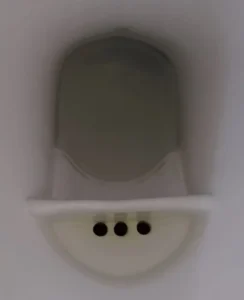
When most people first encounter a “shelf toilet,” their reaction is immediate confusion. You lift the lid expecting a normal bowl of water — but instead, there’s a curious flat ledge sitting high above the waterline. It looks like something out of a plumbing mistake or a bizarre prank, but rest assured, it’s entirely intentional. This odd design, found mainly in parts of Europe, has sparked countless travel stories, online debates, and raised eyebrows from visitors. Yet behind its strange appearance lies a fascinating history rooted in medical observation, hygiene awareness, and cultural practicality.
To understand the shelf toilet, we have to look back to a time before modern laboratories, when health inspection began right in the home — often in the most unexpected of places.
A Short History of a Strange Design
The shelf toilet, known in German as the Flachspüler, has existed for well over a century. While most American toilets use a washdown or siphonic flush system (where waste falls directly into a water pool and disappears), many older European toilets feature a horizontal shelf or plateau just above the water level. Waste lands on the dry surface, stays visible for inspection, and only moves when flushed.
This peculiar design wasn’t born from poor engineering — it was born from curiosity and caution. In the late 19th and early 20th centuries, long before advanced diagnostic labs became accessible, the easiest way to check a person’s health was to look at their stool. Doctors often asked patients to describe color, consistency, or blood presence. A toilet that allowed a quick glance offered a low-cost, everyday health monitor.
Families, especially in postwar Europe, valued practicality and observation. If someone was sick, intestinal issues or internal bleeding could be caught early simply because the design made it visible. It was crude but efficient — a built-in wellness check without the need for medical equipment.
The Practical Reasons It Still Exists
Even though medicine has advanced, the shelf toilet hasn’t completely disappeared. Many European households, particularly in Germany, Austria, Switzerland, and the Netherlands, still feature this design. It’s partly cultural, partly practical — and it even comes with modern advantages that many travelers don’t realize at first.
1. Health Monitoring
The original purpose still holds true: it allows you to spot changes in digestion or illness signs quickly. For example, blood in stool, parasites, or dietary irregularities become visible before flushing. Many health-conscious users still find this helpful, especially for elderly care or medical conditions.
2. Splash-Free Experience
One of the most immediate benefits is something everyone can appreciate: no splashback. Traditional washdown toilets can cause that dreaded cold splash. The shelf design prevents this entirely, offering a dry landing zone that minimizes mess and discomfort.
3. Cleaner Perception
In a shelf toilet, waste doesn’t fall into the water instantly, so there’s less risk of contaminated droplets rising during flushing — a subtle but notable hygiene advantage in some households.
4. Efficient Water Use
Because the waste sits on a surface rather than submerging in water, less water is needed to clear the bowl initially. A powerful but short flush sends everything away cleanly. It’s part of Europe’s long-standing focus on conservation and practicality.
But Yes — The Odor Problem
Of course, every design comes with trade-offs. The biggest complaint travelers voice after their first encounter with a shelf toilet is simple: the smell. Because the waste remains exposed until flushed, odors can appear more noticeable. European households compensate with well-ventilated bathrooms, air fresheners, or prompt flushing habits.
Many shelf toilets also feature stronger flushing systems to compensate, pushing waste quickly and powerfully into the trap after inspection. Modern versions now include angled slopes or glazed ceramic shelves designed to reduce residue and make cleanup easier.
The Cultural Divide: Why the U.S. Doesn’t Use Them
In the United States, toilets evolved differently due to plumbing innovation and cultural preferences. The siphonic flush system — where waste drops directly into a deep water bowl and is pulled away through a siphon action — quickly became the standard. It solved odor issues and offered a more visually “clean” experience.
European countries, particularly those emphasizing practicality and medical observation, maintained the shelf design. It’s not that one system is better or worse — they simply reflect differing priorities: Americans preferred comfort and concealment, while Europeans valued observation and function.
That’s why the shelf toilet still appears in German and Dutch households, hospitals, and older apartments, while being nearly absent in the Americas and much of Asia.
A Closer Look: The Science Behind the Shelf
What might look like an odd design actually follows smart engineering logic. The horizontal ledge slightly tilts toward the back, where the water trap begins. When you flush, a wave of water rushes across the shelf, pushing waste backward and down the outlet swiftly.
This movement ensures minimal splashing while still providing a momentary surface for inspection. The bowl’s curve and flush mechanism are calibrated to handle this flow efficiently — which is why flushing immediately after use is key.
Travelers’ First Encounters
Many travel blogs and social media posts feature confused visitors reacting to their first German or Dutch toilet experience. Reactions range from laughter to disbelief: “Why is there a little stage in my toilet?” or “Did they forget to finish installing this?”
But locals often find the question amusing. To them, the design isn’t strange — it’s practical, traditional, and, in some ways, superior. Germans even have affectionate jokes about it, calling it the “inspection deck.” It’s one of those quirky cultural details that make travel both enlightening and entertaining.
Hygiene and Cleaning Tips
Because waste doesn’t drop directly into water, maintenance is slightly different from what many are used to. Here’s how locals keep these toilets clean and odor-free:
Flush promptly. Never leave waste on the shelf for long. Quick flushing prevents buildup and odor.
Keep a brush handy. Most shelf toilets include a brush right beside them. A quick scrub after each use ensures cleanliness.
Use appropriate cleaners. Non-abrasive products protect the ceramic glaze and prevent staining.
Ventilation matters. Keep a small fan or window open for airflow.
Modern shelf toilets even come with built-in deodorizing systems, proving that the design has evolved while keeping its unique structure.
Hospitals and Medical Settings
While shelf toilets are less common in new homes, they remain valuable in medical and elder care facilities. Doctors and nurses can easily inspect patient waste for early signs of infection or digestive issues. In some clinics, a modified version of the shelf toilet includes a removable tray for sampling or testing.
This adaptation highlights the enduring practicality behind what outsiders often see as an odd relic. Far from outdated, the concept remains useful where precision and observation matter most.
Environmental and Efficiency Factors
Another underrated reason for the shelf design’s persistence lies in efficiency and ecology. Washdown systems, though effective at odor control, use more water per flush. Shelf toilets rely on momentum and design rather than deep water reservoirs, often consuming less water overall.
In a world increasingly focused on sustainability, these older-style toilets suddenly seem forward-thinking. Some modern European eco-builders even reintroduce similar designs under “inspection-friendly” or “low-water” toilet models, blending tradition with modern environmental awareness.
Myths About Shelf Toilets
Let’s clear up a few misconceptions:
Myth 1: They’re outdated or poorly designed.
False — they were engineered with intention and remain in use in many advanced European households.
Myth 2: They’re unsanitary.
Not necessarily. With regular cleaning, the design is no more unhygienic than a standard washdown toilet.
Myth 3: They’re disappearing.
While newer homes use washdown models, shelf toilets still exist widely across Germany, Austria, and the Netherlands, especially in older buildings and healthcare facilities.
Myth 4: They’re uncomfortable to use.
Once familiar with the process — and mindful to flush promptly — most users find them perfectly functional, even splash-free and efficient.
The Psychology of Visibility
One curious aspect of the shelf toilet’s design is its psychological effect. Many people find the visible moment of waste uncomfortable, even embarrassing. Yet this discomfort reveals how much modern culture has distanced itself from natural bodily functions.
For earlier generations, this visibility wasn’t taboo; it was information. A change in color or consistency was a health clue, not a source of shame. In that sense, the shelf toilet represents a more honest, body-aware relationship with health.
The Toilet as Cultural Mirror
The humble toilet — something most of us never think twice about — tells a story about culture, health, and technology. The shelf toilet’s endurance is proof that even something as private as plumbing can reflect national values. Germans and Dutch people have long prized practicality, precision, and health awareness. Americans have favored comfort, speed, and concealment.
Neither system is superior. Each mirrors its society’s relationship to privacy, hygiene, and medicine.
Why You Might Encounter One
You’re most likely to see a shelf toilet when visiting older European homes, heritage hotels, or rural inns. They also appear in some Scandinavian countries, hospitals, and research institutions. Travelers who encounter one should simply remember that it’s a different — but logical — design.
Flush immediately after use, appreciate the splash-free feature, and if curiosity gets the best of you, reflect on the strange ingenuity behind it.
A Symbol of Practical Ingenuity
It’s easy to laugh at the idea of a “toilet with a shelf,” but when examined closely, it’s an impressive blend of hygiene, health awareness, and clever design. What started as a 19th-century medical tool has become a cultural artifact — one that continues to serve its quiet purpose with efficiency and simplicity.
So, the next time you find yourself traveling through Germany or the Netherlands and spot a toilet that looks like it’s hiding a tiny porcelain stage, don’t panic. You’ve simply encountered a clever piece of plumbing history — one that has spent more than a hundred years watching over people’s health, one flush at a time.